

Free Fertilizer Falls from the Sky
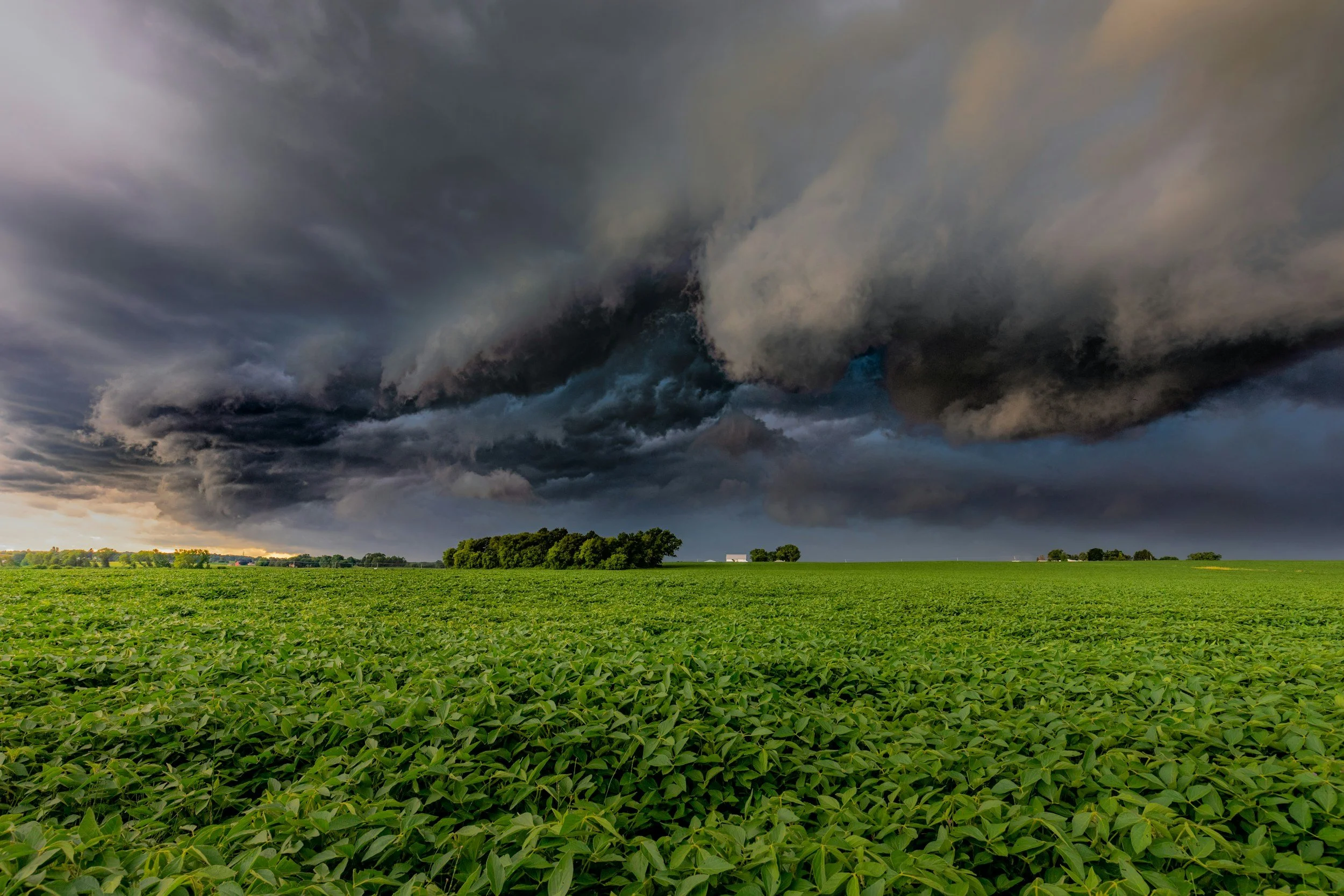
Nature's Nitrogen Cycle Helps Farmers Grow More with Less
For more than a century, modern agriculture has relied heavily on synthetic nitrogen fertilizers to maximize crop production. Yet long before fertilizer factories existed, prairies, forests, wetlands, and grasslands were producing abundant plant growth using a natural system that still operates today.
Every rainfall, every lightning storm, every healthy root system, and every handful of living soil contributes to one of nature's most remarkable processes: the nitrogen cycle.
Understanding and supporting this cycle can help farmers improve soil health, reduce fertilizer costs, increase resilience, and build more productive agricultural systems.
Fertilizer Falls from the Sky
Many people are surprised to learn that rain contains fertilizer.
Earth's atmosphere is made up of nearly 78 percent nitrogen gas. Although plants cannot directly use this form of nitrogen, natural processes continually convert small amounts into plant-available forms.
Lightning is one of these processes.
The tremendous energy released during thunderstorms breaks apart nitrogen molecules in the atmosphere, allowing them to combine with oxygen and eventually dissolve into rainfall. These compounds are deposited onto fields, grasslands, wetlands, and forests where they become available to soil organisms and plants.
While each individual rainstorm contributes only a modest amount, these inputs accumulate year after year across entire landscapes.
Nature has been fertilizing the Great Plains this way for thousands of years.
Soil Microbes Are Nature's Fertilizer Factory
The greatest source of natural nitrogen, however, is not lightning.
It is life itself.
Beneath every healthy field exists an enormous community of bacteria, fungi, archaea, protozoa, nematodes, insects, and countless other organisms.
Some of these microbes possess a remarkable ability known as nitrogen fixation.
Nitrogen-fixing bacteria capture nitrogen gas directly from the atmosphere and convert it into forms that plants can use.
Without these microbes, life on Earth would look very different.
They provide a continuous supply of fertility that powers natural ecosystems across the planet.
Plants and Microbes Work Together
Many plants have evolved partnerships with nitrogen-fixing bacteria.
Legumes such as clovers, alfalfa, peas, beans, vetch, and native prairie legumes form specialized root nodules that house these beneficial microorganisms.
In exchange for sugars produced through photosynthesis, the bacteria provide nitrogen to their plant hosts.
This partnership creates a natural fertilizer source that can enrich soil and support neighboring crops.
For centuries, farmers have used legume rotations because they improve fertility while reducing dependence on purchased inputs.
The microbes do the work for free.
Native Plants Build Fertility
Before cultivation, the Kansas prairie maintained extraordinary productivity without synthetic fertilizer.
A major reason was plant diversity.
Native grasslands contained dozens or even hundreds of plant species, including many nitrogen-fixing legumes.
Species such as prairie clovers, leadplant, false indigo, Illinois bundleflower, and wild indigos contributed to soil fertility while supporting pollinators and wildlife.
Deep root systems moved nutrients through the soil profile, improved water infiltration, and fed vast underground microbial communities.
Restoring portions of this biological diversity can help rebuild soil function on modern farms.
Nitrogen Fixation Is Not Limited to Legumes
When most people hear the term "nitrogen fixation," they think of clover, alfalfa, beans, and other legumes. These plants are famous for their partnerships with bacteria that live inside specialized root nodules.
But legumes are only part of the story.
Many free-living bacteria and archaea can also fix atmospheric nitrogen without living inside plant roots. Species belonging to groups such as Azotobacter, Clostridium, Beijerinckia, and numerous others are found in soils, grasslands, wetlands, forests, and agricultural fields around the world.
These microorganisms require energy to perform nitrogen fixation, and that energy ultimately comes from photosynthesis. Every green plant captures sunlight and converts carbon dioxide into sugars and other organic compounds. Some of this carbon is released into the soil through roots, decaying leaves, crop residues, and other organic matter.
As long as plants are producing carbon and feeding soil life, they help support the microbial communities responsible for natural nitrogen fixation.
In this sense, every productive plant community contributes to the nitrogen cycle, not just legumes.
The more sunlight captured by vegetation and the more carbon returned to the soil, the greater the potential for supporting beneficial microbial activity.
Healthy grasslands, cover crops, agroforestry systems, wetlands, perennial plantings, and diverse crop rotations all help fuel the biological processes that naturally build soil fertility.
Feed the Soil, Feed the Crop
Many agricultural systems focus on feeding plants directly.
Healthy ecosystems focus on feeding soil life.
When soil organisms receive organic matter from roots, crop residues, compost, cover crops, and mulches, they convert those materials into plant-available nutrients.
The result is a gradual increase in natural fertility.
Practices that support soil biology include:
• Reducing unnecessary soil disturbance.
• Maintaining living roots as much of the year as possible.
• Using cover crops.
• Increasing crop diversity.
• Adding organic matter.
• Avoiding practices that damage beneficial microbial communities.
Healthy soil functions like a biological engine that continually recycles nutrients.
Cover Crops as Living Fertilizer
One of the most effective ways to increase natural nitrogen inputs is through cover crops.
Legume cover crops such as crimson clover, hairy vetch, Austrian winter peas, and various clovers actively fix atmospheric nitrogen while protecting the soil.
When terminated, much of that nitrogen becomes available to future crops.
Mixed species cover crops often provide additional benefits, including erosion control, weed suppression, pollinator habitat, and improved soil structure.
Instead of leaving fields biologically inactive between crops, cover crops keep the soil ecosystem functioning year-round.
Supporting Beneficial Microbes
Farmers interested in improving natural fertility should think of themselves as managers of microbial communities.
Beneficial microbes thrive when they have:
• Living roots
• Organic matter
• Soil moisture
• Habitat diversity
• Reduced chemical stress
Prairie strips, shelterbelts, wetlands, perennial plantings, and diverse crop rotations all help create conditions where beneficial soil organisms can flourish.
The healthier the soil food web becomes, the more efficiently nutrients cycle through the system.
Working with Nature
The goal is not necessarily to eliminate fertilizer use.
Rather, it is to recognize that natural systems already provide valuable fertility services that can complement modern agriculture.
Every lightning storm, every nitrogen-fixing bacterium, every clover plant, every healthy root system, and every acre of living soil contributes to crop production.
The challenge for modern agriculture is learning how to work with these systems rather than replacing them entirely.
For thousands of years, the Great Plains grew vast quantities of vegetation without synthetic fertilizer factories. The biological machinery that made that possible still exists beneath our feet.
By rebuilding healthy soils, supporting beneficial microbes, planting nitrogen-fixing species, and restoring biological diversity, farmers can tap into one of the most powerful and cost-effective fertility systems ever created.
Nature has been making fertilizer for free all along.