
Kansas Cranes, Giants of the Prairie Sky
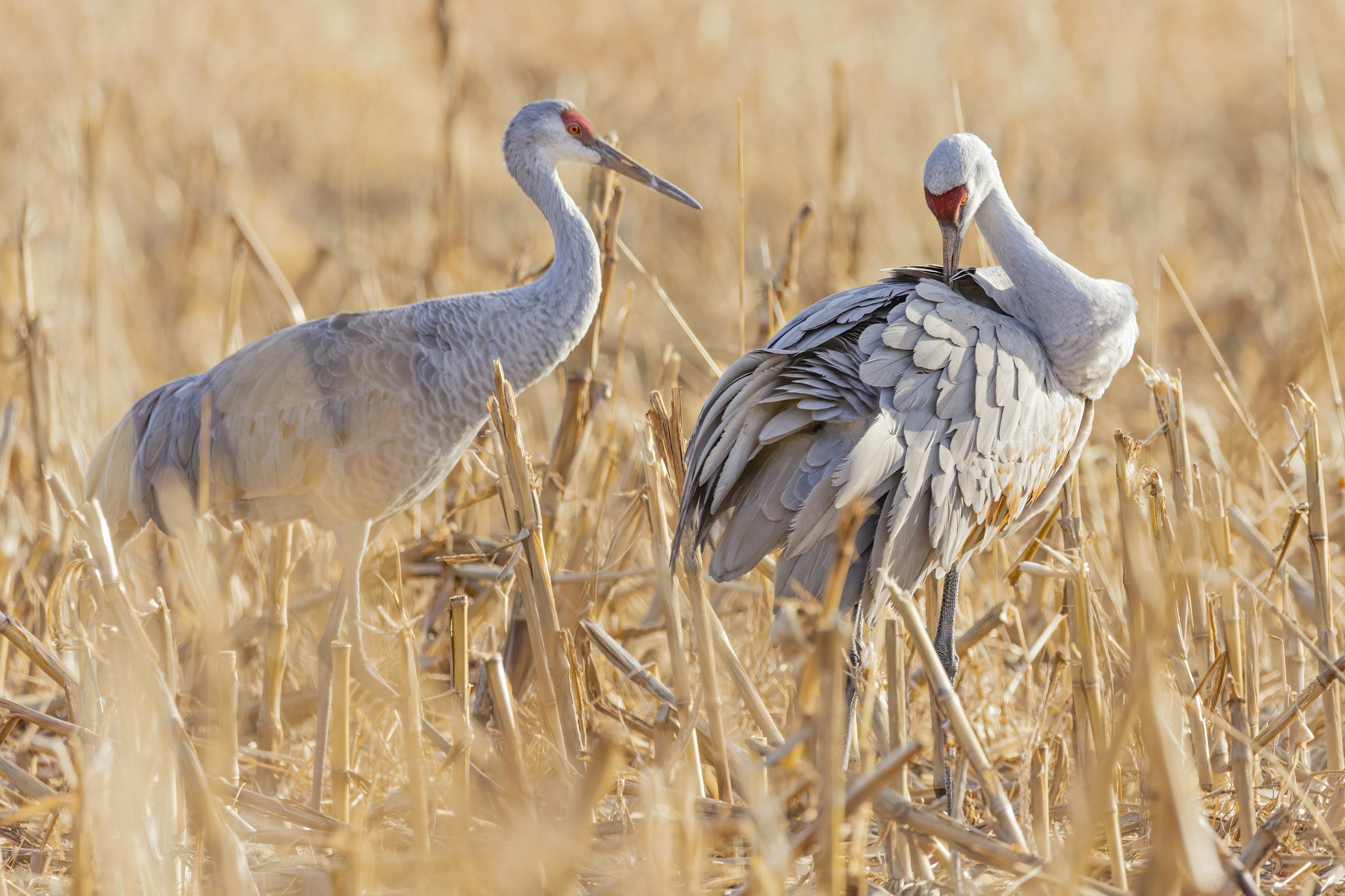
Whooping Cranes resting in Crop Stubble
Every spring and fall, some of the most spectacular travelers in North America pass through Kansas. High above wetlands, rivers, croplands, and prairie marshes, thousands of cranes migrate across the state, filling the sky with their distinctive calls and graceful formations.
For birdwatchers, photographers, and nature enthusiasts, crane migration is one of Kansas' greatest wildlife spectacles. Yet many Kansans are unaware of the remarkable diversity of cranes that visit the state or how important Kansas habitats are to their survival.
The Cranes of Kansas
Kansas hosts three species of cranes, though one is far rarer than the others.
Sandhill Crane
The Sandhill Crane is by far the most common crane seen in Kansas. Standing nearly four feet tall with a wingspan reaching six feet, these elegant gray birds migrate through the state in large numbers during spring and fall.
Their rattling, rolling calls can often be heard long before the birds come into view. During migration, thousands may gather in agricultural fields and wetland areas to rest and feed.
Whooping Crane
The Whooping Crane is one of North America's greatest conservation success stories. Once reduced to fewer than twenty wild birds, careful conservation efforts have helped the population slowly recover.
Standing nearly five feet tall, the Whooping Crane is North America's tallest bird. Its brilliant white plumage and black wing tips make it unmistakable.
Kansas lies directly along the migration route between nesting grounds in northern Canada and wintering areas on the Texas Gulf Coast. During migration, small numbers stop throughout the state, particularly in wetlands and shallow marshes.
Because of their endangered status, observers should remain especially respectful and avoid disturbing them.
Common Crane (Rare Visitor)
The Common Crane, widespread across Europe and Asia, occasionally appears in Kansas as an extremely rare visitor. These sightings generate excitement among birders from across the country.
While most Kansans will never encounter one, rare records remind us that migration sometimes brings unexpected travelers to our prairies.
Why Kansas Matters
Kansas occupies a critical position along the Central Flyway, one of North America's major migration corridors.
The state's combination of wetlands, river valleys, shallow lakes, agricultural fields, and prairie habitats provides everything cranes need during migration:
Safe resting areas
Shallow water for nighttime roosting
Waste grain and natural foods
Open landscapes where predators are easily spotted
Without these stopover habitats, many cranes would struggle to complete migrations that can span thousands of miles.
Important Crane Habitats in Kansas
Several areas have become renowned for crane viewing.
Cheyenne Bottoms Wildlife Area
Often called one of the most important inland wetlands in North America, Cheyenne Bottoms provides crucial habitat for migrating cranes and countless other birds.
Large concentrations of Sandhill Cranes can sometimes be observed feeding and resting throughout the wetland complex during migration seasons.
Quivira National Wildlife Refuge
Located in central Kansas, Quivira serves as a critical stopover for both Sandhill Cranes and migrating Whooping Cranes.
The refuge's shallow marshes and managed wetlands provide ideal resting habitat. Wildlife enthusiasts often travel long distances hoping to glimpse a Whooping Crane among migrating flocks.
Arkansas River Corridor
The Arkansas River and associated wetlands provide important migration habitat across central and western Kansas. During migration, cranes frequently utilize nearby agricultural fields and shallow wetlands.
Farm Ponds and Prairie Wetlands
Many crane sightings occur away from famous wildlife areas. Small wetlands, flooded fields, stock ponds, and prairie marshes across Kansas may host cranes during migration.
Private lands often provide important habitat that receives little public attention.
When to See Cranes
Spring Migration
February through April offers excellent opportunities to observe northbound cranes.
Fall Migration
October through December brings southbound birds returning toward wintering grounds.
Weather patterns can significantly influence migration timing, with cold fronts often triggering major movements.
How to Observe Cranes Respectfully
Watching cranes can be a memorable experience, but responsible viewing is essential.
Keep Your Distance
Cranes need energy reserves to complete long migrations. Repeated disturbance forces birds to waste valuable energy.
Use binoculars or spotting scopes rather than attempting to approach closely.
Stay on Public Roads and Designated Trails
Many cranes feed on private agricultural land. Respect landowner rights and avoid entering fields without permission.
Avoid Flushing Birds
If cranes begin walking away, raising their heads repeatedly, or showing signs of nervous behavior, you are likely too close.
Back away slowly and allow the birds space.
Keep Pets Controlled
Loose dogs can severely stress migrating birds and may cause entire flocks to abandon feeding areas.
Use Quiet Observation
Cranes are naturally alert. Quiet observation often results in better viewing opportunities and less disturbance.
A Sound Worth Hearing
For many wildlife enthusiasts, the most memorable part of encountering cranes is not seeing them—it is hearing them.
The bugling calls of Sandhill Cranes echo across wetlands and prairie landscapes, connecting modern Kansas with ancient migration routes that have existed for thousands of years.
Long before highways, towns, and farms covered the Great Plains, cranes followed these same pathways. Today, each migrating flock reminds us that Kansas remains an important crossroads for wildlife.
By protecting wetlands, restoring native habitats, and practicing respectful wildlife viewing, Kansans can help ensure future generations continue to witness these magnificent travelers crossing the prairie sky.