

The Current State of Commercial Fishing in Kansas: An Opportunity for Invasive Species Management and Rural Economic Growth
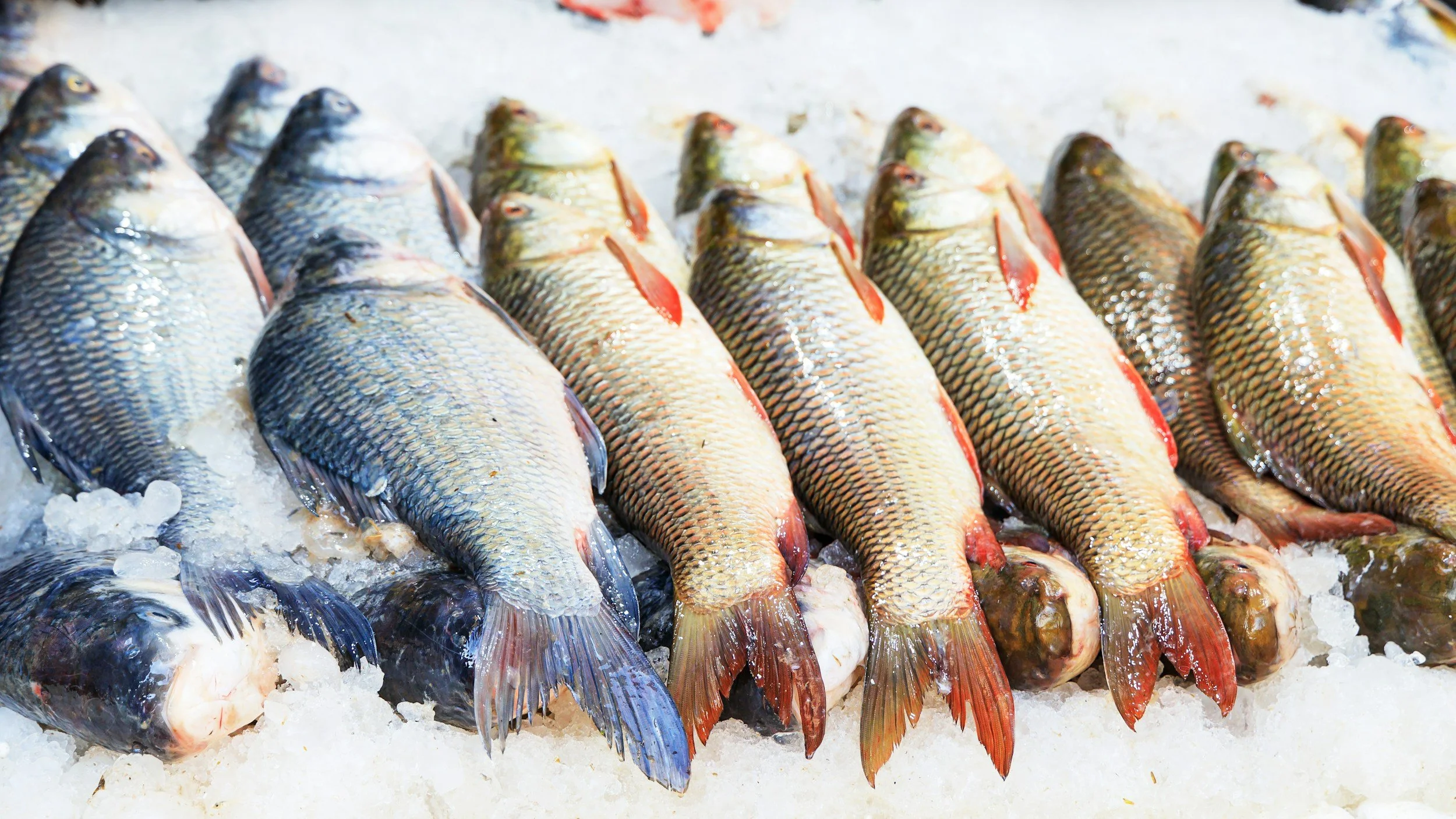
Carp on Ice at a fish market.
Kansas is not generally thought of as a commercial fishing state. Unlike coastal states or those bordering the Great Lakes, Kansas has historically focused on recreational fishing and wildlife conservation. While commercial fishing is legal in Kansas, it is permitted only in a limited number of approved waters, most notably portions of the Missouri River and a few other designated waterways.
Throughout the vast majority of Kansas rivers, creeks, streams, and smaller waterways, commercial fishing remains prohibited. This restriction applies even to invasive and overabundant fish species such as Silver Carp, Bighead Carp, Black Carp, and Common Carp. Recreational anglers may catch many of these fish under existing regulations, but harvesting them for sale from most smaller waterways is generally not allowed.
As a result, thousands of miles of Kansas waterways containing invasive or nuisance fish receive little to no commercial harvest. Population management is left primarily to recreational anglers, natural mortality, and government-funded removal efforts. Many conservationists and rural economic development advocates believe this represents an opportunity to better align environmental management with economic growth through carefully regulated commercial harvest.
What Commercial Fishing Is Currently Allowed?
Kansas currently allows licensed commercial harvest of certain non-game and rough fish species in approved waters. These species include:
Common Carp
Bighead Carp
Silver Carp
Black Carp
Goldfish
Buffalo Fish
Freshwater Drum
Bowfin
Gar
Shad
Goldeye
Skipjack Herring
Licensed commercial fishermen may possess, transport, and sell these species under Kansas regulations using approved commercial fishing gear and following reporting requirements. However, these activities are generally limited to specifically authorized waterways rather than being available statewide.
The Invasive Carp Challenge
Several invasive carp species have become established in portions of Kansas waterways after spreading throughout the Mississippi River Basin. These fish reproduce rapidly, compete with native species for food, alter aquatic ecosystems, and in some cases reduce opportunities for recreational fishing.
Common Carp, while introduced much earlier than Asian carp, can also negatively affect aquatic ecosystems by uprooting vegetation and stirring bottom sediments, reducing water clarity and degrading habitat for native fish and waterfowl.
State agencies have conducted removal efforts where invasive carp populations have become established, demonstrating that sustained harvest can reduce local populations and improve aquatic ecosystems. However, government removal programs require ongoing funding and cannot reach every affected waterway.
Why Expand Commercial Fishing into Smaller Waterways?
A carefully regulated licensing program allowing commercial harvest of invasive and designated rough fish in smaller rivers and streams could provide significant environmental and economic benefits while maintaining protections for native wildlife.
Environmental Benefits
Continuous Invasive Species Removal
Commercial harvest would create a financial incentive for fishermen to remove invasive fish year after year rather than relying solely on publicly funded control programs.
Healthier Native Fish Communities
Reducing invasive carp populations could improve habitat and food availability for native species while helping restore more balanced aquatic ecosystems.
Improved Water Quality
Lower Common Carp populations can reduce sediment disturbance, allowing clearer water, healthier aquatic vegetation, and improved habitat for fish, amphibians, and waterfowl.
Lower Management Costs
Every pound of invasive fish removed by commercial harvest is one less pound that may require taxpayer-funded removal in the future.
Economic Benefits for Rural Kansas
New Sources of Income
Commercial fishing licenses could create seasonal business opportunities for:
Farmers
Ranchers
Rural entrepreneurs
Retirees
Commercial fishermen
For many rural families, commercial fishing could become another source of supplemental income alongside farming, trapping, beekeeping, or custom agricultural work.
Local Food Production
Many fish classified as "rough fish" in North America are considered excellent table fare elsewhere in the world.
Harvested fish could be processed into:
Fresh or frozen fillets
Smoked fish
Fish cakes and sausages
Pet food
Aquaculture feed
Fish meal
Organic fertilizer
Rather than treating invasive fish solely as waste, Kansas could transform them into valuable agricultural products.
Processing and Manufacturing Jobs
A larger commercial fishery could support new businesses including:
Fish processing facilities
Cold storage operations
Transportation companies
Pet food manufacturers
Fertilizer producers
Aquaculture feed manufacturers
These industries would create jobs while adding value to fish harvested within Kansas.
Tourism and Outdoor Recreation
Commercial fishing could complement existing outdoor industries through:
Bowfishing tournaments
Guided fishing trips
Educational programs
Local food festivals
Wildlife tourism
Challenges and Safeguards
Any expansion of commercial fishing should include strong safeguards to protect native ecosystems.
These could include:
Commercial licenses specific to invasive and designated rough fish.
Mandatory harvest reporting.
Species identification training.
Restrictions near sensitive habitats and spawning areas.
Regular monitoring by the Kansas Department of Wildlife and Parks.
Incentives for processing fish within Kansas to maximize economic benefits.
Such measures would allow commercial harvest to support conservation while minimizing risks to native fish populations.
Looking Ahead
Kansas already recognizes commercial fishing as a useful fisheries management tool, but current opportunities remain limited to a handful of approved waters. Expanding commercial harvest into carefully selected smaller waterways, particularly where invasive fish have become established, could reduce pressure on native ecosystems while creating new economic opportunities for rural communities.
With thoughtful regulation, commercial fishing could become another conservation tool, transforming invasive fish from an environmental liability into a valuable resource. By encouraging responsible harvest instead of allowing invasive populations to grow unchecked, Kansas has an opportunity to strengthen both its waterways and its rural economy.