
Bur Hedge Parsley (Torilis arvensis): Identification, Impacts, Life Cycle, and Control
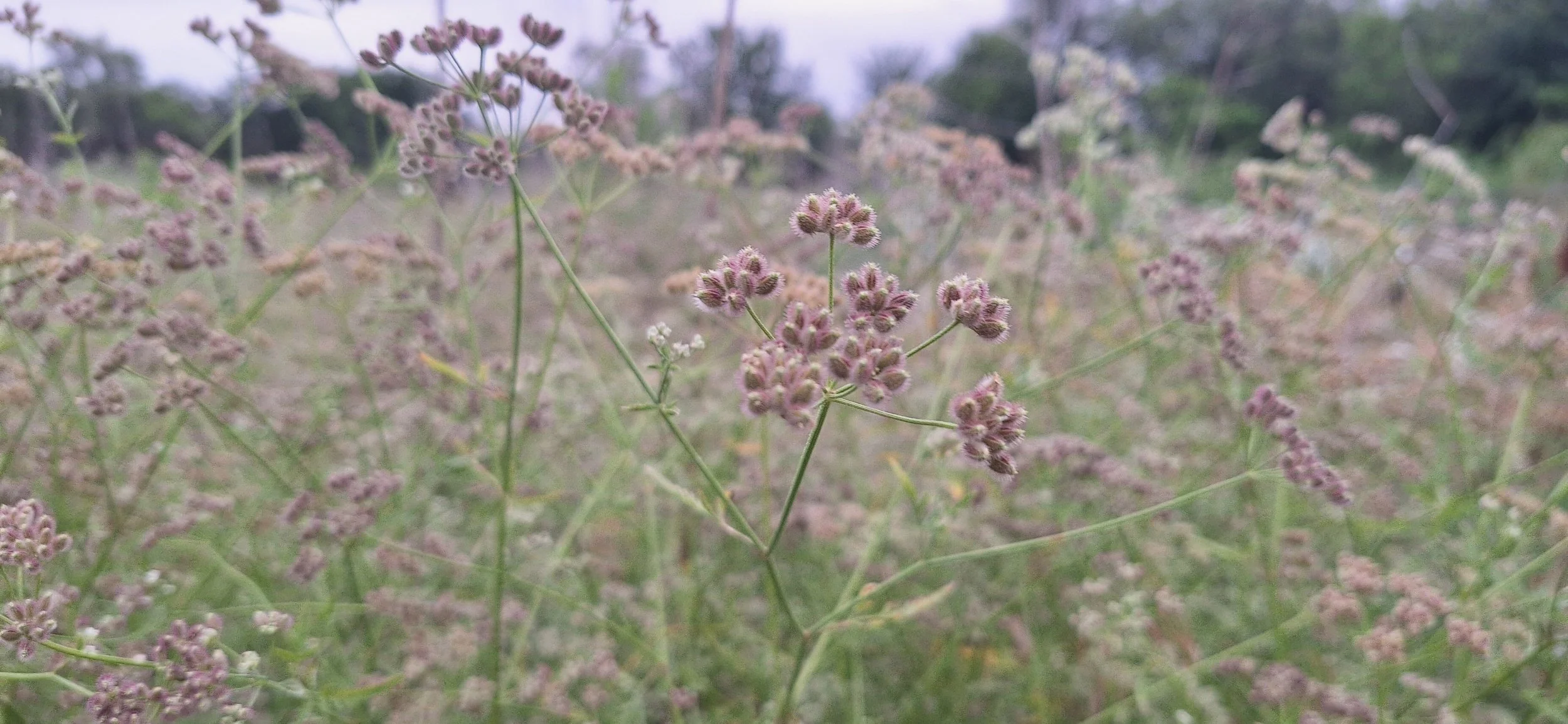
Immature Bur Hedge Parsley Seeds Developing on the Plant
What is Bur Hedge Parsley?
Bur Hedge Parsley (Torilis arvensis) is an invasive annual plant in the carrot family (Apiaceae). Native to Europe, North Africa, and parts of Asia, it has spread throughout much of North America, where it is increasingly recognized as a troublesome weed in grasslands, pastures, roadsides, wildlife habitat plantings, and restored prairie ecosystems.
While its delicate white flowers may appear harmless, Bur Hedge Parsley can rapidly dominate disturbed habitats and produce thousands of hitchhiking seeds that cling to animals, clothing, equipment, and wildlife.
Botanical Description
Bur Hedge Parsley is a branching annual herb that typically grows between 1 and 4 feet (30–120 cm) tall.
Leaves
Fern-like and finely divided
Bright to medium green
Similar in appearance to wild carrot or parsley
Alternate arrangement along stems
Stems
Ridged and often hairy
Highly branched in mature plants
Upright growth habit
Flowers
Small white flowers
Arranged in umbrella-shaped clusters called umbels
Bloom from late spring through summer
Seeds
Small burr-like fruits covered with hooked bristles
Easily attach to fur, feathers, clothing, and equipment
Responsible for most long-distance dispersal
Life Cycle
Bur Hedge Parsley is primarily a winter annual, though it can occasionally behave as a summer annual depending on climate.
Fall
Seeds germinate when temperatures cool.
Winter
Plants persist as low-growing rosettes.
Spring
Rapid stem elongation and growth occur.
Early Summer
Flowering begins.
Mid to Late Summer
Seed production peaks.
Late Summer
Plants die after producing seed.
Individual plants may produce hundreds to thousands of seeds, creating large soil seed banks that can persist for several years.
How Bur Hedge Parsley Spreads
The plant's success comes largely from its highly effective seed dispersal system.
Animal Dispersal
Seeds attach readily to:
Deer
Coyotes
Rabbits
Livestock
Domestic pets
Ground-nesting birds
Human Dispersal
Seeds often hitchhike on:
Clothing
Hiking boots
Farm machinery
Vehicles
Mowing equipment
Hay and Forage
Contaminated hay can transport seeds to new locations.
Water
Flooding and runoff may move seeds into wetlands and riparian corridors.
Why Bur Hedge Parsley is a Problem
Loss of Native Biodiversity
Dense infestations can suppress native grasses and wildflowers by competing for:
Sunlight
Water
Nutrients
Growing space
This is especially concerning in prairie restoration projects and wildlife habitat plantings.
Reduced Wildlife Habitat Quality
Although some insects may utilize the flowers, dense stands often replace more valuable native plants that provide:
Better pollinator resources
Host plants for butterflies
Higher quality nesting cover
More nutritious forage
Livestock Concerns
The burr-covered seeds can:
Become tangled in animal fur
Reduce the quality of wool and hair
Cause discomfort to livestock and pets
Recreation and Tourism Impacts
Seeds cling aggressively to:
Clothing
Socks
Pet fur
Hunting gear
This can make trails, parks, and natural areas less enjoyable for visitors.
Ecological Conditions That Favor Bur Hedge Parsley
The species thrives in:
Disturbed soils
Overgrazed pastures
Roadsides
Construction sites
Prairie restorations
Open woodlands
Field edges
It generally performs poorly in dense, healthy native plant communities with strong competition.
Control and Management
Successful management usually requires preventing seed production for multiple years.
Mechanical Control
Hand Pulling
Effective for:
Small infestations
Newly established populations
Plants should be removed before flowering and seed formation.
Mowing
Mowing can reduce seed production if timed correctly.
Best results occur when mowing:
During early flowering
Before seed maturation
Repeated mowing may be necessary.
Cultural Control
Promote Dense Native Vegetation
Healthy plant communities provide the best long-term resistance.
Useful competitors include:
Big Bluestem
Indiangrass
Switchgrass
Native sedges
Diverse native wildflowers
Reduce Soil Disturbance
Avoid unnecessary:
Tillage
Overgrazing
Bare soil exposure
Disturbed areas create ideal germination sites.
Grazing Management
Well-managed rotational grazing can maintain healthy plant competition.
Overgrazing often increases Bur Hedge Parsley abundance by weakening desirable vegetation.
Herbicide Control
For large infestations, herbicides may be necessary.
Products commonly used include selective broadleaf herbicides containing:
2,4-D
Dicamba
Aminopyralid
Metsulfuron methyl
Applications are generally most effective:
During the rosette stage
In fall or early spring
Always follow label directions and consider impacts on desirable broadleaf plants and pollinator habitat.
Long-Term Outlook
Bur Hedge Parsley can be difficult to eliminate because of its persistent seed bank and efficient dispersal mechanisms. However, infestations can be greatly reduced through consistent management and restoration of healthy plant communities.
The most successful strategy is usually a combination of:
Early detection
Preventing seed production
Maintaining vigorous native vegetation
Limiting soil disturbance
Monitoring for reinvasion
Final Thoughts
Bur Hedge Parsley is a classic example of a plant that takes advantage of disturbance. While rarely the most destructive invasive species in a landscape, its ability to spread on wildlife, livestock, and people allows it to quickly colonize new areas.
For landowners, farmers, habitat managers, and conservationists, the key to success is stopping seed production before infestations become established. Combined with strong native plant communities, this approach can greatly reduce the long-term impact of Bur Hedge Parsley and help maintain healthy, diverse ecosystems.