
Kansas Thistles: The Good, The Bad, and The Ugly
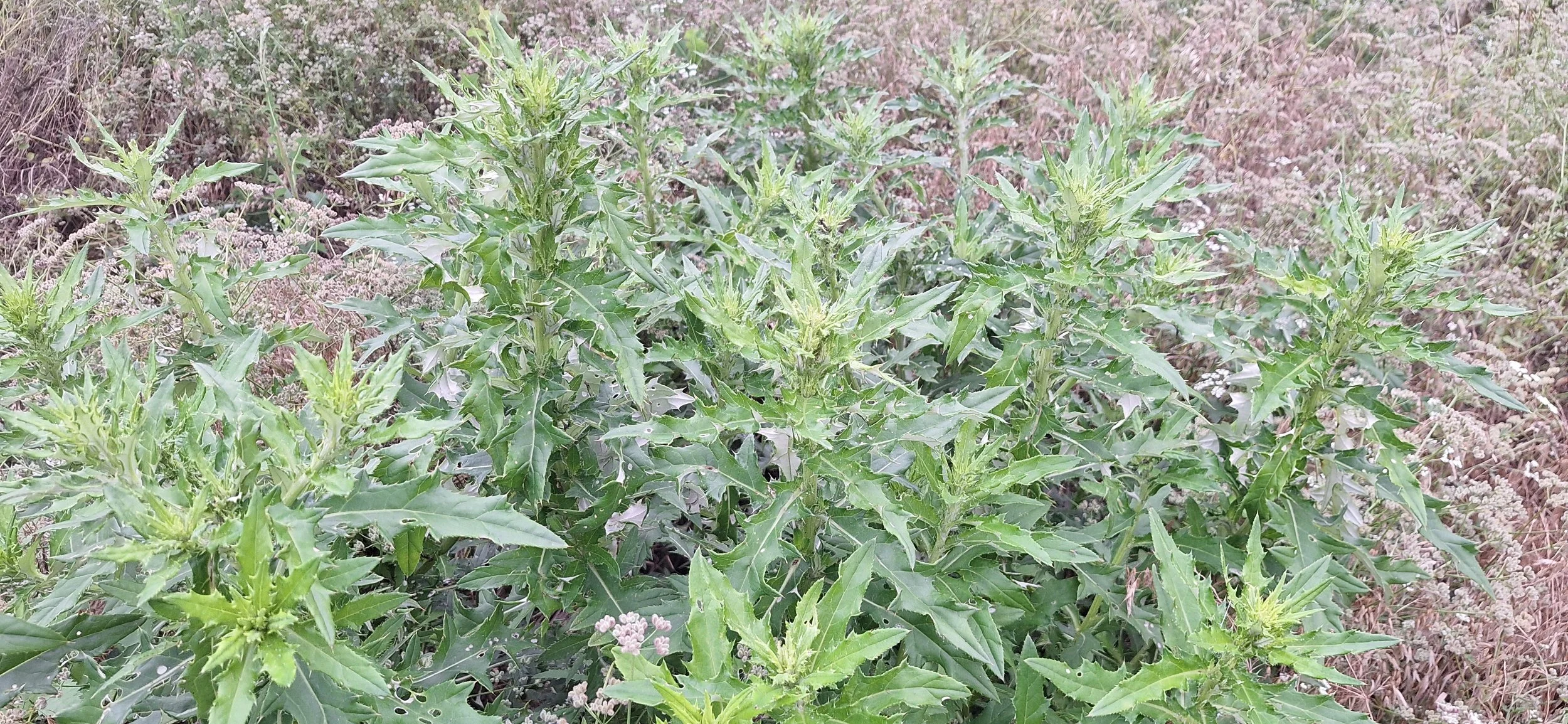
Invasive Creeping Thistle aka Canadian Thistle
Thistles are among the most misunderstood plants in Kansas. To many landowners, every spiny plant with a purple flower is simply a "thistle" and therefore a weed. In reality, Kansas is home to several native thistles that support pollinators, birds, and wildlife, while a handful of invasive species cause significant economic and ecological damage.
Understanding the difference is important. Removing native thistles can unintentionally harm wildlife, while failing to control invasive thistles can lead to degraded rangelands, reduced agricultural productivity, and damaged native ecosystems.
This guide categorizes Kansas thistles into three groups:
The Good – Native thistles that provide ecological benefits and are not considered major pests.
The Bad – Native thistles that can become aggressive or problematic under certain conditions.
The Ugly – Invasive, non-native thistles that should be controlled whenever possible.
Why Thistles Matter
Although often disliked because of their spines, thistles are among the most valuable flowering plants for wildlife.
Benefits include:
Nectar for native bees
Food for butterflies and moths
Seeds for goldfinches and other birds
Habitat for beneficial insects
Drought tolerance
Soil stabilization
Many native pollinators rely heavily on thistle flowers during midsummer when other nectar sources become scarce.
The Good: Beneficial Native Kansas Thistles
Tall Thistle (Cirsium altissimum)
The Tall Thistle is one of the most common native thistles in Kansas.
Identification:
Usually 4–10 feet tall
White to pale pink flowers
Leaves green above and white beneath
Blooms late summer
Benefits:
Excellent pollinator plant
Supports monarchs and native butterflies
Produces seed for goldfinches
Rarely forms dense infestations
Wavyleaf Thistle (Cirsium undulatum)
One of the most beautiful native prairie thistles.
Identification:
Large lavender flowers
Wavy leaf margins
Silvery appearance
Common in prairies and rangelands
Benefits:
Important nectar source
Supports prairie biodiversity
Deep roots improve drought resilience
Hill's Thistle and Other Native Species
Several additional native thistles occur regionally throughout the Great Plains.
Benefits include:
Pollinator support
Wildlife forage
Native plant diversity
Resilience in dry landscapes
Most native thistles are biennials or short-lived perennials and seldom dominate healthy ecosystems.
The Bad: Native Thistles That Can Become Problematic
Native thistles are rarely invasive in the ecological sense, but some can become locally abundant after disturbance.
Tall Thistle
Although generally beneficial, Tall Thistle can colonize:
Overgrazed pastures
Disturbed roadsides
Construction sites
Recently burned areas
In heavily disturbed habitats it may temporarily become abundant and reduce access to grazing.
However, populations usually decline naturally as vegetation recovers.
Disturbance-Driven Native Thistle Outbreaks
When native thistles become numerous, they often indicate:
Overgrazing
Soil disturbance
Reduced plant competition
Drought stress
Rather than targeting the thistles alone, managers should address the underlying habitat problem.
Native thistles are often symptoms rather than causes of ecosystem degradation.
The Ugly: Invasive Non-Native Thistles
These species cause substantial economic and ecological damage across Kansas.
Musk Thistle (Carduus nutans)
One of Kansas' most notorious invasive weeds.
Identification:
Large nodding flower heads
Purple flowers
Thick spiny leaves
Can reach 7 feet tall
Problems:
Invades rangelands
Reduces grazing acreage
Produces thousands of seeds
Outcompetes native plants
A single plant may produce more than 10,000 seeds.
Bull Thistle (Cirsium vulgare)
A European species common throughout Kansas.
Identification:
Extremely spiny leaves
Purple flowers
Winged stems covered in spines
Problems:
Colonizes disturbed ground
Reduces recreational access
Creates barriers for livestock and wildlife
Canada Thistle (Cirsium arvense)
Despite the name, this species originated in Europe.
Identification:
Spreads through underground roots
Small purple flower clusters
Few spines compared to other thistles
Problems:
Extremely difficult to eradicate
Forms dense colonies
Reduces crop yields
Outcompetes native vegetation
Unlike most thistles, Canada Thistle spreads aggressively through root systems.
Scotch Thistle (Onopordum acanthium)
A giant invasive thistle occasionally found in Kansas.
Identification:
Gray-white appearance
Massive leaves
Can exceed 8 feet tall
Problems:
Dense infestations
Livestock access issues
Reduced forage production
Kansas Thistle Identification Key
Step 1
Does the plant form spreading colonies connected by underground roots?
Yes → Canada Thistle
No → Go to Step 2
Step 2
Are the flower heads nodding or drooping?
Yes → Musk Thistle
No → Go to Step 3
Step 3
Are stems heavily winged and covered in sharp spines?
Yes → Bull Thistle
No → Go to Step 4
Step 4
Is the plant over 6 feet tall with white-backed leaves and relatively sparse spines?
Yes → Tall Thistle
No → Go to Step 5
Step 5
Does the plant have silvery, wavy leaves and large lavender flowers?
Yes → Wavyleaf Thistle
No → Consult local extension resources for further identification.
The Harm Caused by Noxious Thistles
Noxious thistles create both economic and ecological problems.
Economic impacts:
Reduced forage production
Lower livestock carrying capacity
Increased management costs
Reduced property value
Crop yield losses
Ecological impacts:
Displacement of native wildflowers
Reduced biodiversity
Altered wildlife habitat
Increased monocultures
Heavy infestations may persist for decades if left unmanaged.
Controlling Problem Thistles
Prevention
The most effective control method is maintaining healthy plant communities.
Best practices:
Avoid overgrazing
Maintain ground cover
Reseed disturbed areas
Prevent soil disturbance
Mechanical Control
For small infestations:
Dig plants below the root crown
Mow before seed production
Remove flower heads
Do not mow after seeds mature, as this can spread infestations.
Biological Control
Several insects have been introduced to control invasive thistles.
Examples include:
Seed-head weevils
Rosette weevils
Biological controls can reduce seed production but rarely eliminate infestations completely.
Herbicide Control
For severe infestations:
Treat rosettes in fall or early spring
Follow all label instructions
Avoid spraying native thistles
Selective herbicides are often most effective when plants are actively growing.
Protecting Native Thistles
Before controlling any thistle, identify it carefully.
Native thistles:
Support pollinators
Feed songbirds
Enhance prairie biodiversity
Serve as host plants for numerous insects
The loss of native thistles can have unintended consequences for Kansas wildlife.
Conclusion
Not all thistles are weeds. Kansas native thistles such as Tall Thistle and Wavyleaf Thistle are valuable components of healthy prairie ecosystems and provide important resources for pollinators and birds.
Invasive species such as Musk Thistle, Canada Thistle, Bull Thistle, and Scotch Thistle are a different story. These species can reduce forage production, degrade habitats, and outcompete native plants.
Successful land stewardship requires learning the difference. By protecting native thistles while controlling invasive ones, Kansas landowners can support both agricultural productivity and wildlife conservation.